



Cannabinoid Receptor
Cannabinoid Receptor
Cannabinoid receptors are currently classified into three groups: central (CB1), peripheral (CB2) and GPR55, all of which are G-protein-coupled. CB1 receptors are primarily located at central and peripheral nerve terminals. CB2 receptors are predominantly expressed in non-neuronal tissues, particularly immune cells, where they modulate cytokine release and cell migration. Recent reports have suggested that CB2 receptors may also be expressed in the CNS. GPR55 receptors are non-CB1/CB2 receptors that exhibit affinity for endogenous, plant and synthetic cannabinoids. Endogenous ligands for cannabinoid receptors have been discovered, including anandamide and 2-arachidonylglycerol.
Cannabinoid Receptor Isoform Specific Products
All Product Categories
-
Cannabinoid Receptor Inhibitors
(37)
View all products
-
Cannabinoid Receptor Agonists
(141)
View all products
-
Cannabinoid Receptor Antagonists
(76)
View all products
-
Cannabinoid Receptor Activators
(14)
View all products
-
Cannabinoid Receptor Modulators
(24)
View all products
-
Cannabinoid Receptor Chemical
(1)
View all products
-
Cannabinoid Receptor Inducer
(1)
View all products
-
Cannabinoid Receptor Degrader
(1)
View all products
-
Cannabinoid Receptor Controls
(2)
View all products
-
Cannabinoid Receptor Ligands
(13)
View all products
-
Cannabinoid Receptor Related Products (448)
Related Products (448)

-
Antibodies (1)
-
Cannabinoid Receptor Isoform Comparison
-
GAT229
 0 ImagesCat. No.: HY-121600CAS No.: 889860-85-9GAT229 is a CB1 positive allosteric modulator (PAM) that effectively reduces intraocular pressure (IOP) in high IOP mouse models and enhances CB1 receptor-mediated IOP-lowering effects. A 0.2% GAT229 solution or 10 mg/kg of GAT229 alone significantly reduces IOP. GAT229 is promising for research related to glaucoma and elevated intraocular pressure.
-
Otenabant Hydrochloride
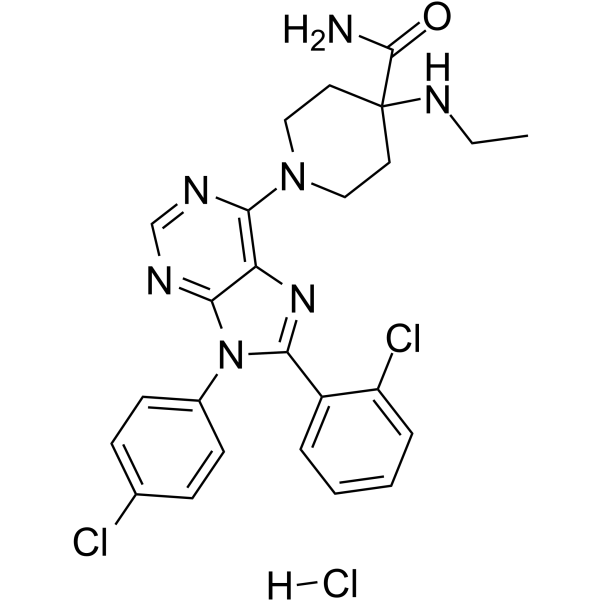 0 ImagesCat. No.: HY-10871ACAS No.: 686347-12-6Synonyms: CP 945598 HydrochlorideOtenabant Hydrochloride is a potent and selective cannabinoid receptor CB1 antagonist with Ki of 0.7 nM, exhibits 10,000-fold greater selectivity against human CB2 receptor.
-
(R)-Zevaquenabant
 0 ImagesCat. No.: HY-141411BPurity: 99.15%Synonyms: (R)-MRI-1867(R)-Zevaquenabant ((R)-MRI-1867) is the enantiomer of Zevaquenabant (HY-141411A). Zevaquenabant ((S)-MRI-1867) is a peripherally restricted, orally bioavailable dual cannabinoid CB1 receptor and inducible NOS antagonist. Zevaquenabant ameliorates obesity-induced chronic kidney disease (CKD).
-
SER-601
 0 ImagesCat. No.: HY-110065CAS No.: 1048038-90-9SER-601 is a potent and selective peripheral cannabinoid (CB2) receptor agonist with a Ki of 6.3 nM. SER-601 has analgesic and antidiabetic properties and can be used for relevant research.
-
Heptadecanoyl ethanolamide
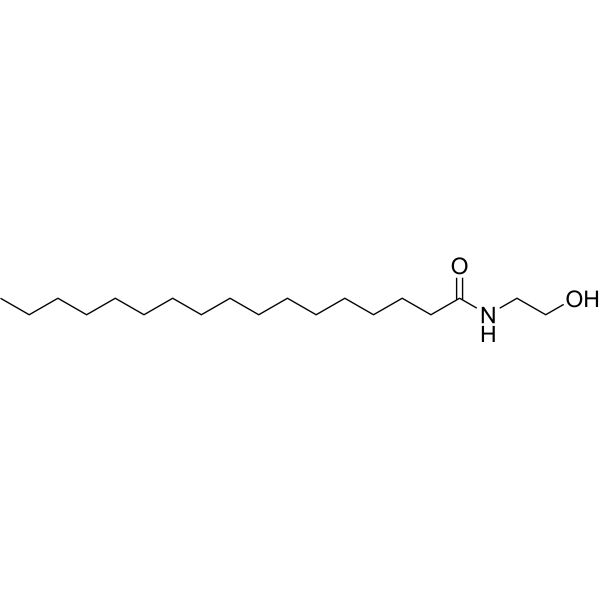 0 ImagesHeptadecanoyl ethanolamide is an endogenous cannabinoid. Heptadecanoyl ethanolamide is a synthetic analog of PEA which incorporates an odd-numbered (17-carbon) fatty acid chain.
-
AM9405
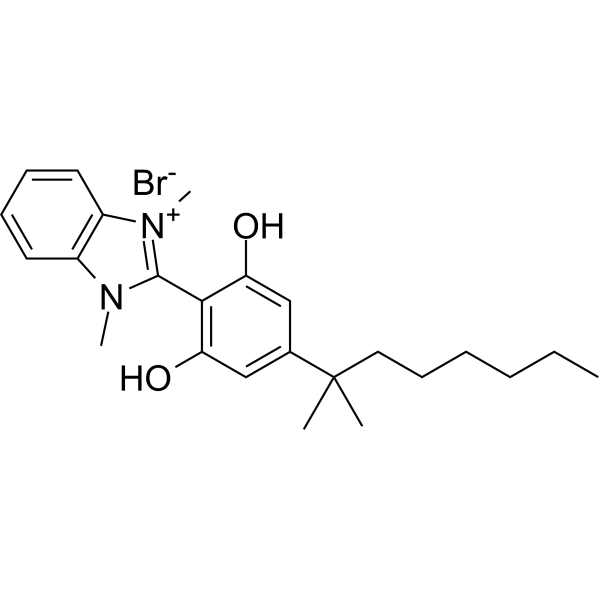 0 ImagesCat. No.: HY-112707CAS No.: 3032946-55-4AM9405 is a novel peripherally active cannabinoid type 1 (CB1) and serotonin type 3 receptor agonist. AM9405 inhibits twitch contraction of the ileum and the colon with IC50s of 45.71 and 0.076 nM, respectively.
-
Anandamide-d11
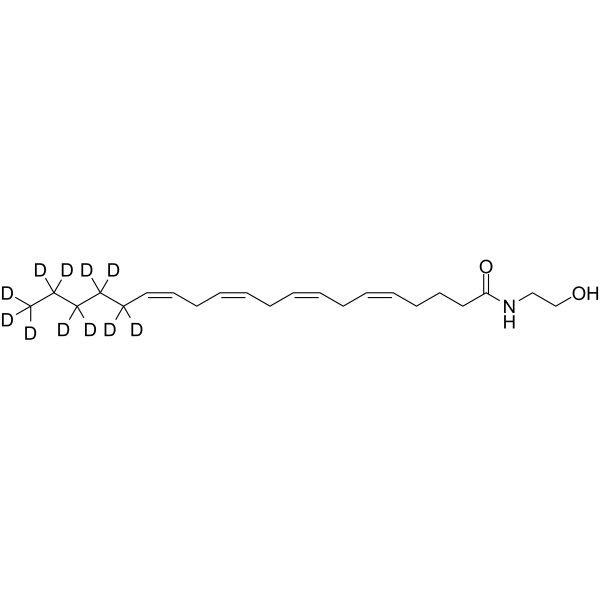 0 ImagesSynonyms: AEA-d11
-
S-Methoprene (Standard)
 0 ImagesSynonyms: (+)-Methoprene (Standard); (7S)-Methoprene (Standard)2-Methyl-3-(trifluoromethyl)aniline (Standard) is the analytical standard of 2-Methyl-3-(trifluoromethyl)aniline. This product is intended for research and analytical applications. 2-Methyl-3-(trifluoromethyl)aniline is a biochemical reagent that can be used as a biological material or organic compound for life science related research.
-
β-Caryophyllene-13C,d2
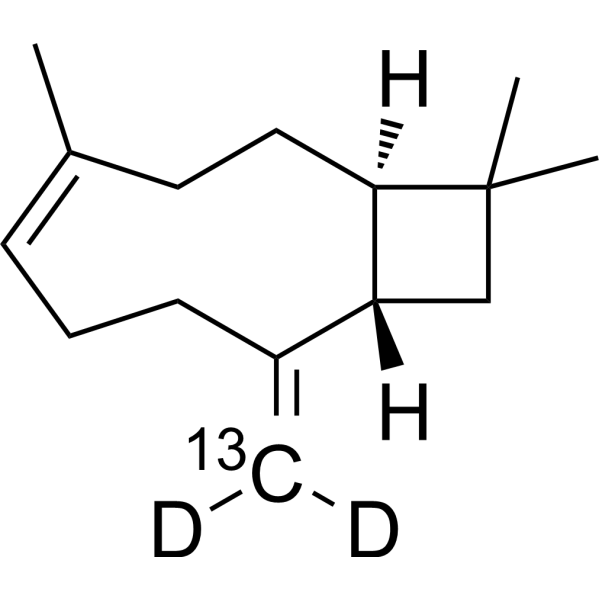 0 ImagesCat. No.: HY-N1415S1CAS No.: 3028869-04-4Synonyms: (-)-(E)-Caryophyllene-13C,d2; (−)-β-caryophyllene-13C,d2; (−)-trans-Caryophyllene-13C,d2β-Caryophyllene-13C,d2 is 13C and deuterated labeled β-Caryophyllene (HY-N1415). β-Caryophyllene is a CB2 receptor agonist.
-
CB2 receptor antagonist 1
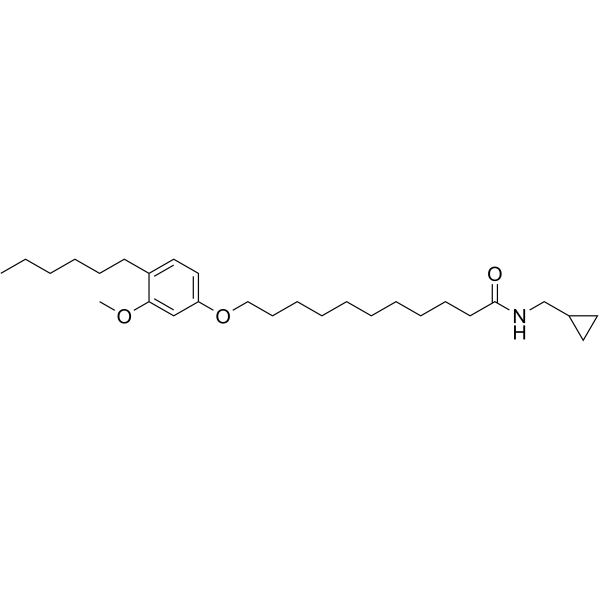 0 ImagesCat. No.: HY-147707CAS No.: 2772693-05-5Hexyl resorcinol derivative 29 has been proved to be a CB2 selective competitive antagonist / reverse agonist with good potency. Olivanol and 5- (2-methyloctane-2-yl) resorcinol derivatives 23 and 24 showed significant antinociceptive activity. Compound 24 was shown to activate cannabinoid and TRPV1 receptors.
-
Virodhamine TFA
 0 ImagesCat. No.: HY-110194CAS No.: 1415264-56-0Virodhamine TFA is an endocannabinoid, it regulates neurotransmission by activating the cannabinoid (CB) receptors. Virodhamine is an antagonist of CB1 receptor and an agonist of CB2 receptor. Virodhamine TFA induces megakaryocytic differentiation by triggering MAPK signaling and ROS production. Virodhamine TFA can be used for the research of various neurological disorders such as Alzheimer's and Parkinson's diseases.
-
Isopropyl dodec-11-enylfluorophosphonate
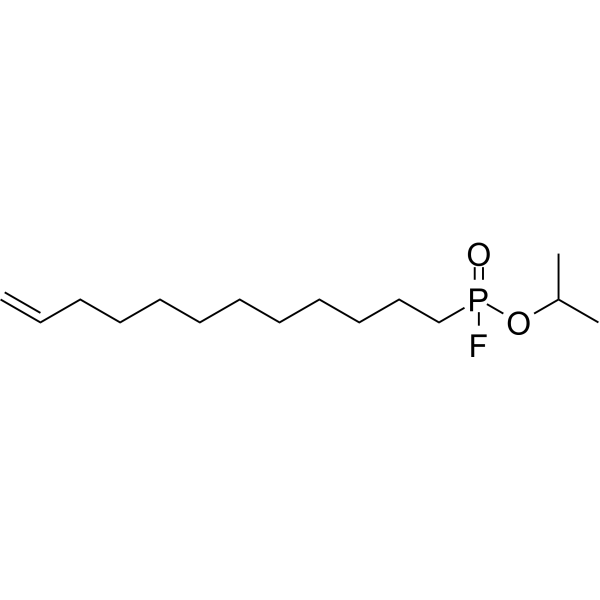 0 ImagesCat. No.: HY-148909CAS No.: 623114-64-7Synonyms: IDEFPIsopropyl dodec-11-enylfluorophosphonate (IDEFP) is an organophosphorus ester that antagonizes the central cannabinoid receptor (CB1) and inhibits FAAH with similar potencies (IC50 = 2 nM).
-
(R)-SLV 319
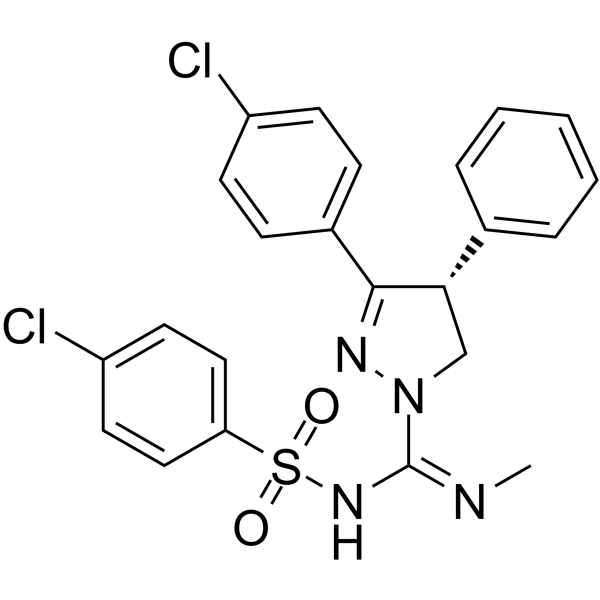 0 ImagesCat. No.: HY-121616CAS No.: 656827-86-0(R)-SLV 319 is a potent and selective cannabinoid receptor 1 (CB1) antagonist with a Ki value of 894 nM. (R)-SLV 319 is a dextrorotatory counterpart of SLV 319
-
RTICBM-189
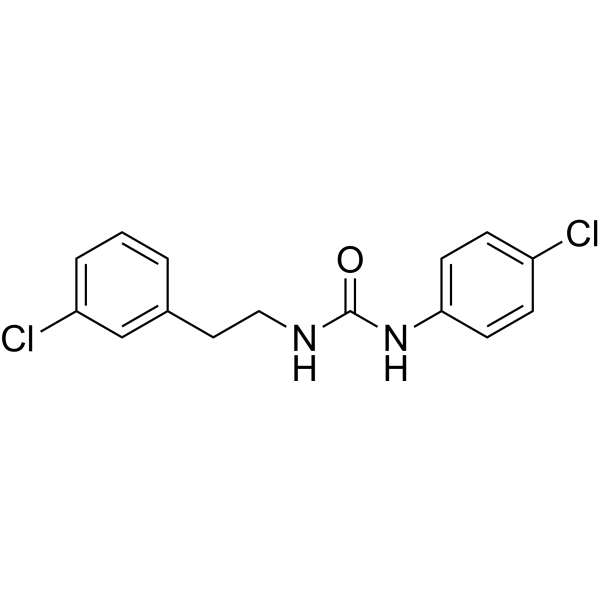 0 ImagesRTICBM-189 is a potent, brain-penetrant allosteric modulator of the cannabinoid type-1 (CB1) receptor with a pIC50 of 7.54 in Ca2+ mobilization assay. RTICBM-189 has pIC50s of 5.29 and 6.25 for hCB1 and mCB1, respectively. RTICBM-189 significantly and selectively attenuates the reinstatement of the addictive agent-seeking behavior in rats.
-
CB2 receptor agonist 9
 0 ImagesCat. No.: HY-168734CAS No.: 2374894-21-8
-
(±)5(6)-EET Ethanolamide
 0 ImagesCat. No.: HY-172568(±)5(6)-EET Ethanolamide is a metabolite of Anandamide (HY-10863) generated via oxidation by cytochrome P450 enzymes. (±)5(6)-EET Ethanolamide is also a selective cannabinoid receptor 2 (CB2) agonist. (±)5(6)-EET Ethanolamide has Ki values of 11.4 μM and 8.9 nM for human CB1 and CB2, respectively . (±)5(6)-EET Ethanolamide can be used in research on immunomodulation and neuroinflammation.
-
Palmitoyl serinol-d5
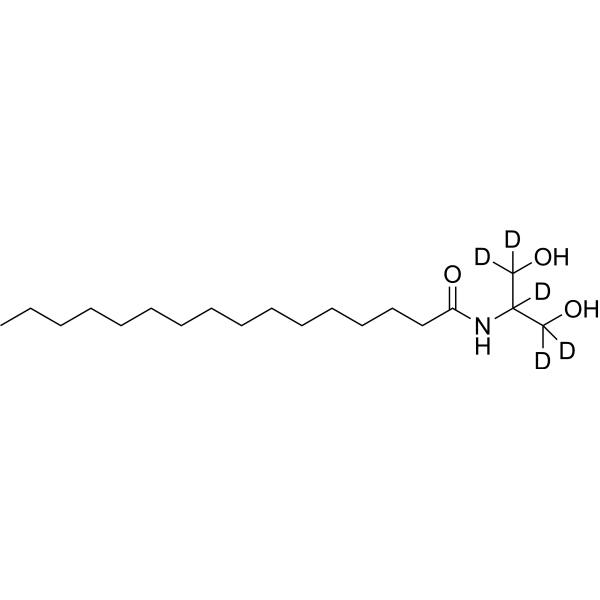 0 ImagesCat. No.: HY-125407SCAS No.: 946524-35-2Synonyms: N-Palmitoyl serinol-d5Palmitoyl serinol-d5 is the deuterium labeled Palmitoyl serinol. Palmitoyl serinol (N-Palmitoyl serinol) is an analog of the endocannabinoid N-palmitoyl ethanolamine (PEA). Palmitoyl serinol improves the epidermal permeability barrier in both normal and inflamed skin.
-
Virodhamine hydrochloride
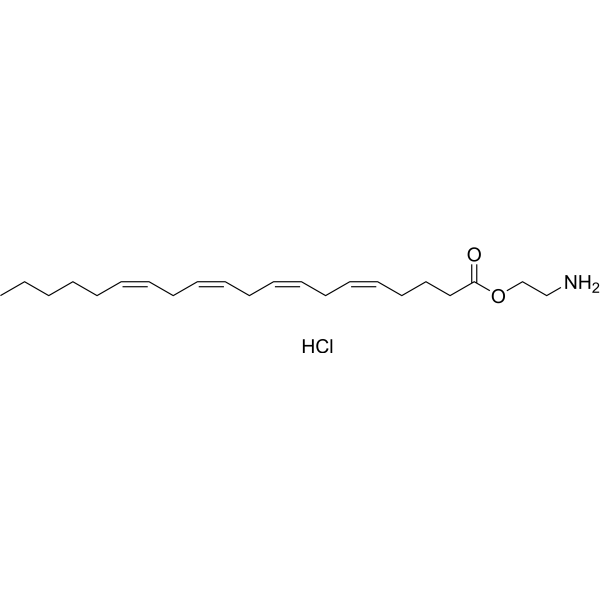 0 ImagesCat. No.: HY-128040CAS No.: 443129-35-9
-
LY320135
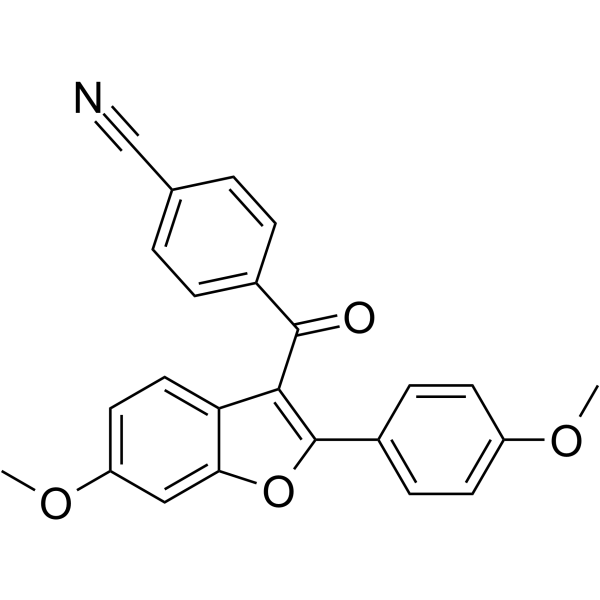 0 ImagesCat. No.: HY-W011040CAS No.: 176977-56-3LY320135 is a potent and selective antagonist of CB1 receptor, with a Ki of 141 nM. LY320135 also binds to 5-HT2 and muscarinic receptors with Kis of 6.4 μM and 2.1 μM, respectively. LY320135 exhibits neuroprotective effect.




